Introduction: The Intersection of Utility and Urbanity
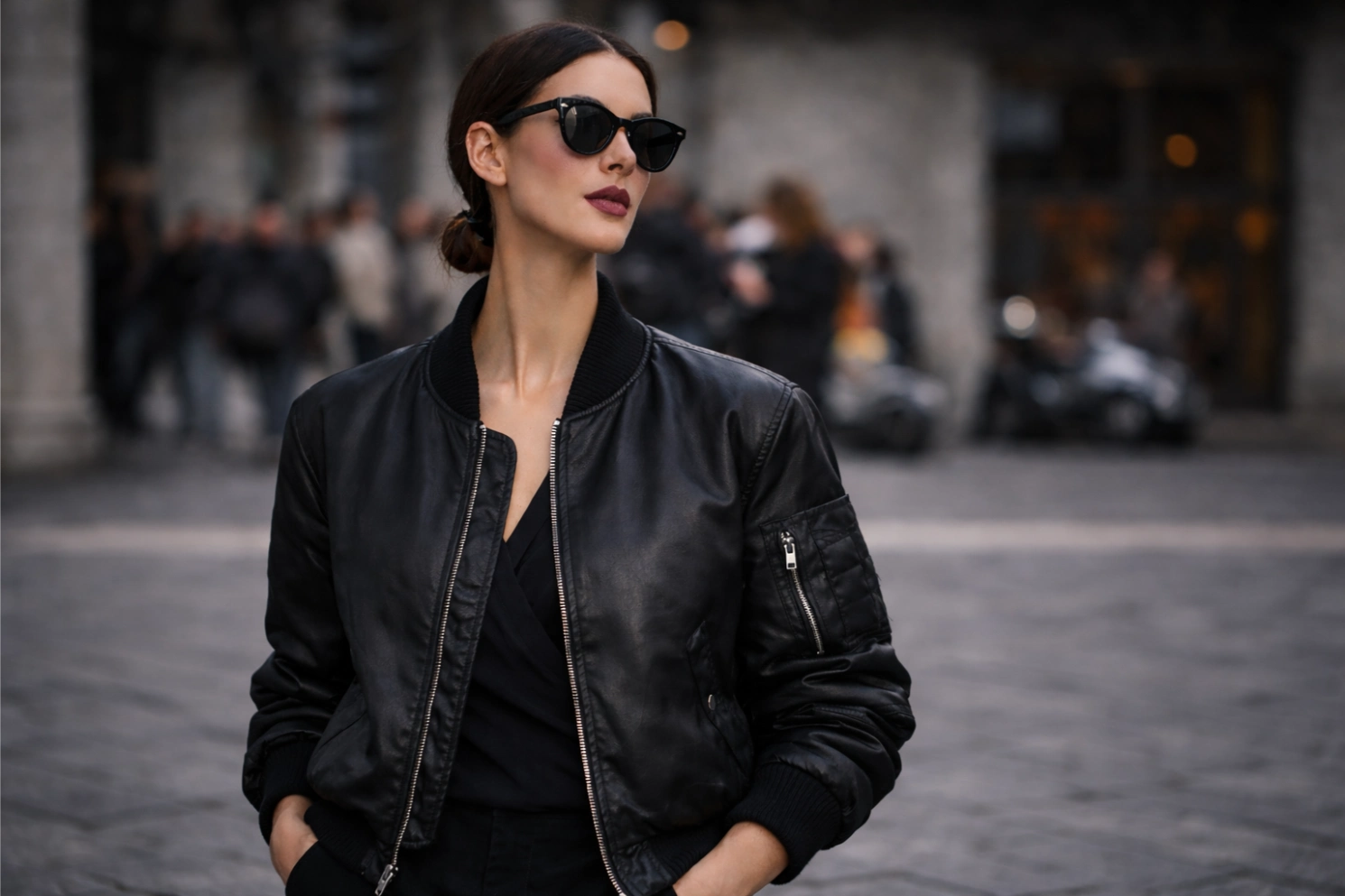
In the expansive landscape of modern fashion, few garments command as much respect and versatility as the street-style bomber jacket. What began as a rigid piece of military equipment, designed to keep pilots from freezing at 30,000 feet, has evolved into the ultimate symbol of cool on the ground. Today, the bomber jacket stands as a casual outerwear staple that masterfully blends military utility with a sophisticated urban aesthetic.
The rise of the street style bomber jacket from functional gear to a global cultural symbol is a testament to the power of subcultural adoption. Whether it’s the high-shine nylon of a classic MA-1 or the distressed leather of a luxury avant-garde piece, this jacket speaks a universal language of rebellion and practicality. In this comprehensive research guide, we will explore the history and design of street style today, providing a deep analysis of why this garment remains a permanent fixture in the wardrobes of fashion enthusiasts worldwide.
According to Vogue archives and academic fashion studies, the longevity of the street style bomber jacket is rooted in its “utilitarian neutrality.” It is a blank canvas that adapts to the wearer’s identity, crossing boundaries of gender, class, and geography. By examining the technical specifications, historical milestones, and global variations, we can uncover how the bomber jacket became the “urban armor” of the 21st century.
Origins and Military Roots: The Engineering of an Icon


To truly understand the street style bomber jacket, one must look to the sky. The jacket’s design was never intended for aesthetics; it was a solution to a life-or-death engineering problem involving high-altitude aviation and the rapid advancement of jet technology.
WWII and the Birth of the MA-1
Before the 1950s, pilots wore the B-15 jacket. While effective, the B-15 featured a bulky fur collar. As jet technology advanced, cockpits became increasingly cramped and filled with sophisticated equipment. Fur collars interfered with the straps of parachute harnesses and oxygen masks, creating a safety hazard. The U.S. Air Force needed a streamlined, lightweight alternative that provided warmth without the bulk.
The result was the MA-1. Manufacturers like Alpha Industries, founded in 1959, were instrumental in refining this design for the Department of Defense. The MA-1 utilized high-quality flight nylon—a revolutionary fabric at the time. This material provided superior wind and water resistance, crucial for pilots ejected into harsh environments, while allowing for a full range of motion within the cockpit.
Technical Evolution: The Anatomy of Flight
The street style bomber jacket still carries the DNA of these original specifications, which were patented for survival.
- Fire-Resistant Nylon: Early military versions were treated to resist cockpit fires (fire-resistant means the fabric will not easily catch fire), a feature that translates today into the heavy-duty, high-denier (denier is a measure of the thickness of the fibers) nylon used by premium streetwear brands.
- The Safety Orange Lining: Perhaps the most iconic functional feature. If a pilot crashed behind enemy lines, they could reverse the jacket to its bright orange side (reversible means the jacket can be turned inside out to display another color) to be easily spotted by search-and-rescue teams. In modern street style bomber jacket culture, this is a nod to ‘authenticity.’
- Ribbed Trim: The knit collar, cuffs, and waistband were designed to trap heat against the body, a feature that modern enthusiasts now value for creating that signature “puffy” or “bubble” silhouette that defines urban style.
Transition to Street Style: A Sociological Timeline
The migration of the street style bomber jacket from military surplus stores to fashion runways is a journey of cultural appropriation, subcultural defiance, and the democratization of style.
1960s-1970s: The European “Mod” and Skinhead Adoption
In post-war Britain, the street style bomber jacket was adopted by the skinhead and punk movements. For these groups, the jacket represented a rejection of the “soft” or “preppy” aesthetics of the upper class. It was tough, cheap, and durable—readily available in surplus stores. It signaled a connection to the working class and a “no-nonsense” attitude. By the late 70s, the burgundy and navy bombers became staples of the London underground scene.
1980s: Hip-Hop Pioneers and Urban Empowerment
In the United States, hip-hop pioneers like Public Enemy and Run-DMC began wearing the bomber as a symbol of urban empowerment. The bomber jacket became a uniform for those navigating the grit of city life. Its boxy shape allowed for ease of movement—essential for breakdancers—and its rugged exterior mirrored the “toughness” required in the burgeoning rap scene.
1990s: Grunge and the “Oversized” Era
The 1990s marked a shift in proportions. Influenced by the Seattle grunge scene and icons like Kurt Cobain, the street style bomber jacket was worn significantly larger. It was thrifted, beaten up, and paired with flannel shirts and distressed denim. This era solidified the jacket’s place in “unisex” fashion, as the baggy fit worked regardless of gender, a precursor to the gender-neutral trends we see in 2026.
2010s–2026: The Hypebeast and Luxury Boom
The mid-2010s saw the street style bomber jacket enter the luxury stratosphere. Designers like Virgil Abloh (Off-White) and Demna Gvasalia (Balenciaga) took the classic MA-1 and turned it into a high-fashion statement. 2025 resale data from StockX indicates that limited-edition bomber jacket collaborations continue to appreciate in value, often selling for double their retail price, proving that the jacket is now a “blue-chip” fashion investment.
Anatomy and Key Design Features Explained

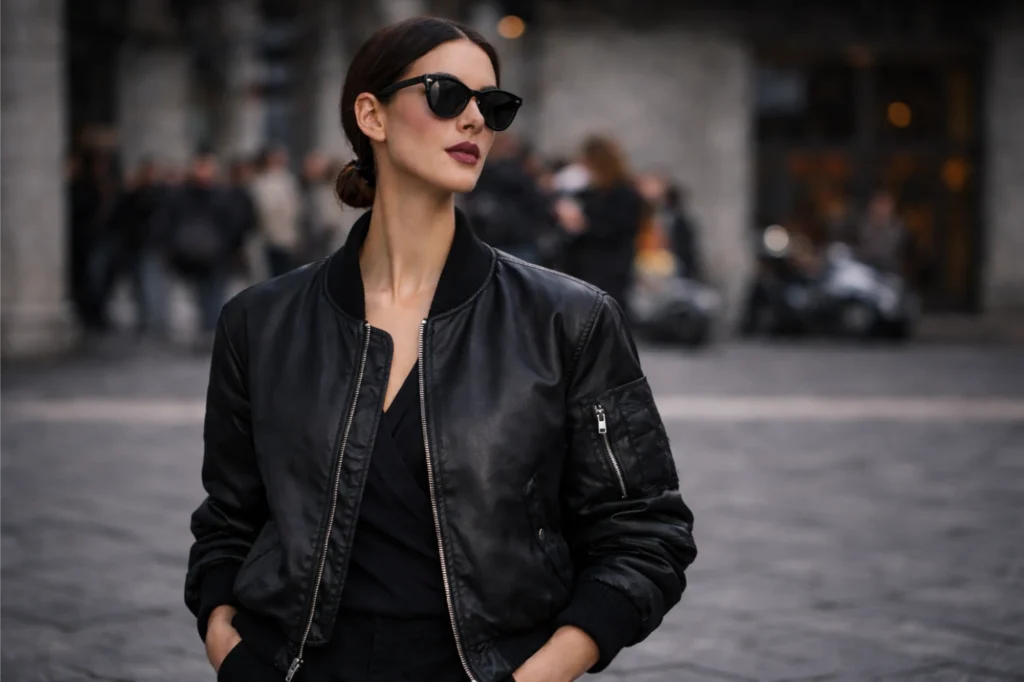
Every stitch of a street style bomber jacket serves a purpose. Modern designers have maintained these features while tweaking the proportions for a 2026 aesthetic.
Detailed Breakdown of Features
- The Cigarette Pocket: Located on the left sleeve, this was originally for pilot essentials like pens and maps. In modern street style bomber jacket design, it serves as a branding hub for the iconic “Remove Before Flight” tags or high-fashion hardware.
- Ribbed Cuffs and Hem: These elasticized components are what give the jacket its “bubble” shape. In streetwear, these are often reinforced with heavy-duty spandex to ensure they don’t lose their elasticity over time, maintaining the silhouette through years of wear.
- Storm Flap: The fabric behind the zipper that prevents wind from cutting through. This is a hallmark of a high-quality street style jacket, separating the technical pieces from the “fast fashion” imitations.
- Shoulder Gussets: Originally designed for cockpit mobility, these extra folds of fabric in the back allow for the wide, “dropped-shoulder” look that is currently trending in street style circles.
Table: Anatomy of a Street Style Bomber Jacket
| Shell | Wind/Water Resistance | Moved from heavy nylon to eco-satin and vegan leather |
| Lining | Insulation/Visibility | Now features graphic prints or luxury quilting |
| Hardware | Closure/Utility | Shifted to oversized, industrial-grade metal zippers |
| Ribbing | Heat Retention | Often features “distressed” or “raw” edges in 2026 |
Materials, Construction, and Sustainability in the Modern Era
In the current fashion landscape, the “cool” factor of a street style bomber jacket is increasingly measured by its ecological footprint. The shift from purely industrial materials to ethically sourced textiles has redefined the construction of the street style.
The Science of Flight: Nylon vs. Sustainable Alternatives
Traditional flight nylon is a petroleum-based product valued for its high tensile strength and hydrophobic properties. However, as the industry moves toward circularity, many street style bomber jacket manufacturers are adopting recycled nylon (ECONYL). This material is salvaged from ghost fishing nets and industrial plastic waste, offering the same high-shine finish as virgin nylon but with an 80% reduction in carbon impact.
Construction Metrics: Beyond the Surface
A high-quality street style bomber jacket is judged by its “fill” and “denier.”
- Denier Count: Most premium street style pieces use 100D to 200D nylon. This provides the “crunchy” texture and structural integrity required to maintain the jacket’s shape when layered.
- Insulation Physics: While original military jackets used wool pile, 2026 variants utilize Primaloft or recycled down. These materials offer a superior warmth-to-weight ratio, allowing for a “puffy” street style bomber jacket look that doesn’t weigh the wearer down.
- Certifications: Look for the GOTS (Global Organic Textile Standard) or GRS (Global Recycled Standard) tags on the interior of the jacket to verify ethical manufacturing claims.
Sizing, Fit, and Proportions for Optimal Wear
Achieving the perfect silhouette with a street style bomber jacket is a matter of understanding “visual weight.” Because the jacket is naturally voluminous, it acts as the anchor for your entire outfit.
The Physics of the “Boxy” Look
The most sought-after street style bomber jacket fit in 2026 is the “Boxy-Cropped” hybrid.
- Shoulder Drop: The shoulder seams should sit 2–3 inches below your natural shoulder line. This creates the “slouch” essential to streetwear.
- The Waistline Rule: For an authentic street style look, the waistband should hit right at the top of your hips. If it falls too low, it becomes a traditional “work jacket”; too high, and it enters “high-fashion avant-garde” territory.
- Sleeve Stacking: The sleeves of a street style bomber jacket are intentionally long. This creates “stacks” or folds of fabric at the forearm, adding to the rugged, industrial vibe of the garment.
Fit Guide by Body Type
- Petite Frames: Opt for a cropped jacket to avoid being “swallowed” by the fabric.
- Broad Shoulders: Look for raglan sleeves, which allow for a better range of motion and prevent the jacket from looking too “stiff.”
- Tall/Athletic: An oversized street style bomber jacket with a heavy-duty ribbed hem helps create a balanced, triangular silhouette.
Influential Brands and Their Contributions


The market for the street style bomber jacket is diverse, ranging from heritage manufacturers to experimental designers.
The Heritage Guard: Alpha Industries
No discussion of the street style bomber jacket is complete without Alpha Industries. Holding the original 1950s patents, they have successfully pivoted from military supply to a street style powerhouse. Their “Slim Fit MA-1” and “L-2B” variants remain the industry gold standard for authenticity.
The Contemporary Minimalists: Acne Studios and Fear of God
Brands like Acne Studios have reimagined the street style bomber jacket by stripping away the military patches and using matte, heavyweight fabrics. Meanwhile, Jerry Lorenzo’s Fear of God has popularized the “Luxury Bomber,” utilizing iridescent satins and elongated proportions to bridge the gap between street and runway.
Market Analysis: Pricing and Resale
As of early 2026, the street style bomber jacket market has seen a 12% year-over-year growth in the “premium” segment ($300–$600). Data from platforms like Grailed shows that vintage ’90s bombers—specifically those with unique fade patterns—often sell for higher prices than brand-new units, highlighting the value of “lived-in” aesthetics.
Care, Repair, and Longevity: A Scientist’s Approach
To ensure your street style bomber jacket survives the rigors of urban life, specialized maintenance is required.
Cleaning Protocols by Fabric
- Nylon/Satin: Never use high heat. High temperatures can “melt” the synthetic fibers of a street-style bomber jacket, leading to a permanent loss of sheen. Use cold water and air-dry only.
- Leather: Treat once a year with a mink-oil-based conditioner to prevent the “skin” from cracking under the stress of the ribbed cuffs.
Repair and Hardware Maintenance
The zipper is the most common point of failure. If the teeth of your street style bomber jacket zipper become misaligned, avoid forcing the pull. Use a graphite pencil to lubricate the tracks. For small tears in the nylon, “Tenacious Tape” patches have become a badge of honor in the streetwear community, signaling that the jacket has been “battle-tested” in the city.
Cultural Significance and Global Variations
The street style bomber jacket is a global dialect with regional accents.
- Tokyo (The Sukajan): In Harajuku, the street style bomber jacket is often replaced by the Sukajan, featuring hand-embroidered dragons and tigers. This reflects a fusion of post-war Americana and traditional Japanese artistry.
- London (The Grime Aesthetic): In the UK, the black-on-black street style bomber jacket is a staple of the “Roadman” look, prioritized for its anonymity and weather resistance in the drizzly British climate.
- Paris (The Varsity Hybrid): French designers often mix the bomber silhouette with wool and leather, creating a “Varsity” style that is more polished and suitable for “smart-street” occasions.
Buying Guide: Selecting Your Street Style Bomber Jacket
When you are ready to invest, use this final decision matrix:
- Climate: Do you need the heavy poly-fill of an MA-1, or the breathable “L-2B” flight jacket for warmer months?
- Versatility: A black or navy street style bomber jacket offers the most utility, while a “safety orange” or “burgundy” piece serves as a statement “grail” item.
- Hardware: Always check the weight of the zipper. A flimsy zipper is the first sign of a low-quality jacket.
Frequently Asked Questions About the Street Style Bomber Jacket
What are popular street style bomber jacket brands?
In 2026, the market is divided into heritage, contemporary, and luxury tiers.
- Heritage: Alpha Industries remains the undisputed king, offering the most authentic military-spec silhouettes.
- Contemporary: Brands like Carhartt WIP, Stüssy, and Acne Studios are the go-to for durability and minimalist design.
- Luxury: For high-fashion iterations, Balenciaga, Fear of God, and Off-White lead the pack with experimental fabrics and oversized cuts.
How to style an oversized bomber jacket for a streetwear look?
The key to mastering an oversized street style bomber jacket is balancing the proportions. Since the jacket adds significant volume to your upper half, pair it with straight-leg or relaxed-fit denim rather than ultra-skinny jeans to maintain a cohesive silhouette. Layer a heavyweight hoodie underneath to fill out the shoulders, and finish the look with “chunky” footwear—like platform sneakers or combat boots—to anchor the visual weight of the jacket.
What defines a man’s street style bomber jacket?
A men’s street style bomber jacket typically focuses on a “boxy” and “utilitarian” aesthetic. Key features include the classic utility sleeve pocket, a heavy-duty front zipper, and a slightly cropped waistline that allows for layering with longer t-shirts or flannels. In recent seasons, earth tones like olive drab, coyote brown, and charcoal grey have dominated the men’s segment.
Where to find limited edition street style bomber jackets?
For rare or highly sought-after pieces, the secondary market is your best resource. Platforms like StockX, Grailed, and GOAT are the primary hubs for limited-edition collaborations (e.g., Stüssy x Alpha Industries). If you are looking for brand-new releases, keep an eye on “drop” calendars at boutique retailers like KITH, Bodega, or Dover Street Market.
Can a street style bomber jacket be worn in the summer?
Yes, provided you choose the right variant. While the MA-1 is designed for winter, the L-2B flight jacket is the lightweight, non-padded version of the street style jacket specifically engineered for warmer climates. Look for “unlined” or “satin-shell” versions to stay cool while maintaining the aesthetic.
Is the street style bomber jacket considered gender-neutral?
Absolutely. The bomber jacket is one of the most successful examples of unisex fashion. Its origins in military utility mean the fit is based on function rather than traditional gendered tailoring, making it a staple for anyone’s wardrobe regardless of gender identity.
How should a street style bomber jacket fit at the waist?
For a modern look, the ribbed waistband of your street style jacket should sit right at the top of your hip bones. This “cropped” effect prevents the jacket from looking like a parka and helps emphasize the “bubble” silhouette that defines high-end streetwear.
Conclusion: The Immortal Jacket
The street style bomber jacket has achieved something few other garments have: it has remained culturally relevant for over seven decades. It has survived the transition from the cockpit to the catwalk by being fundamentally adaptable. Whether you are wearing a thrifted ’90s piece or a 2026 sustainable nylon variant, you are participating in a rich history of technical innovation and social rebellion.
Mastering the bomber jacket isn’t just about following a trend; it’s about owning a piece of “urban armor” that is built to last.
Do you have a favorite brand for the ultimate street style bomber jacket? Have you tried DIY-ing your own patches? Leave your research questions in the comments below!